
PALAZZO STROZZI EXHIBITIONS IN FLORENCE
There is a place in Florence where the Renaissance does not belong only to the past. At Palazzo Strozzi, the rooms that once told of the prestige of a great Florentine family now welcome works capable of challenging the way we observe the world. The exhibitions at Palazzo Strozzi span different eras and artistic languages, transforming one of the city’s most important Renaissance buildings into a space where history and contemporary art meet.
In recent years, the palace has hosted exhibitions dedicated to some of the most influential figures in international art. Ai Weiwei, Marina Abramović, Jeff Koons, Olafur Eliasson, Anish Kapoor and Tomás Saraceno have brought very different artistic visions to Florence, each leaving a mark on the exhibition history of the Fondazione Palazzo Strozzi.
In 2016, Ai Weiwei. Free transformed the palace into a place for reflection on the relationship between art, freedom and human rights. The Chinese artist’s installations also involved the Renaissance facade, on which large orange inflatable boats appeared, an image that became a symbol of the exhibition. Two years later, Marina Abramović. The Cleaner brought the language of performance art to Florence, retracing over fifty years of her career through works, videos and live performances.
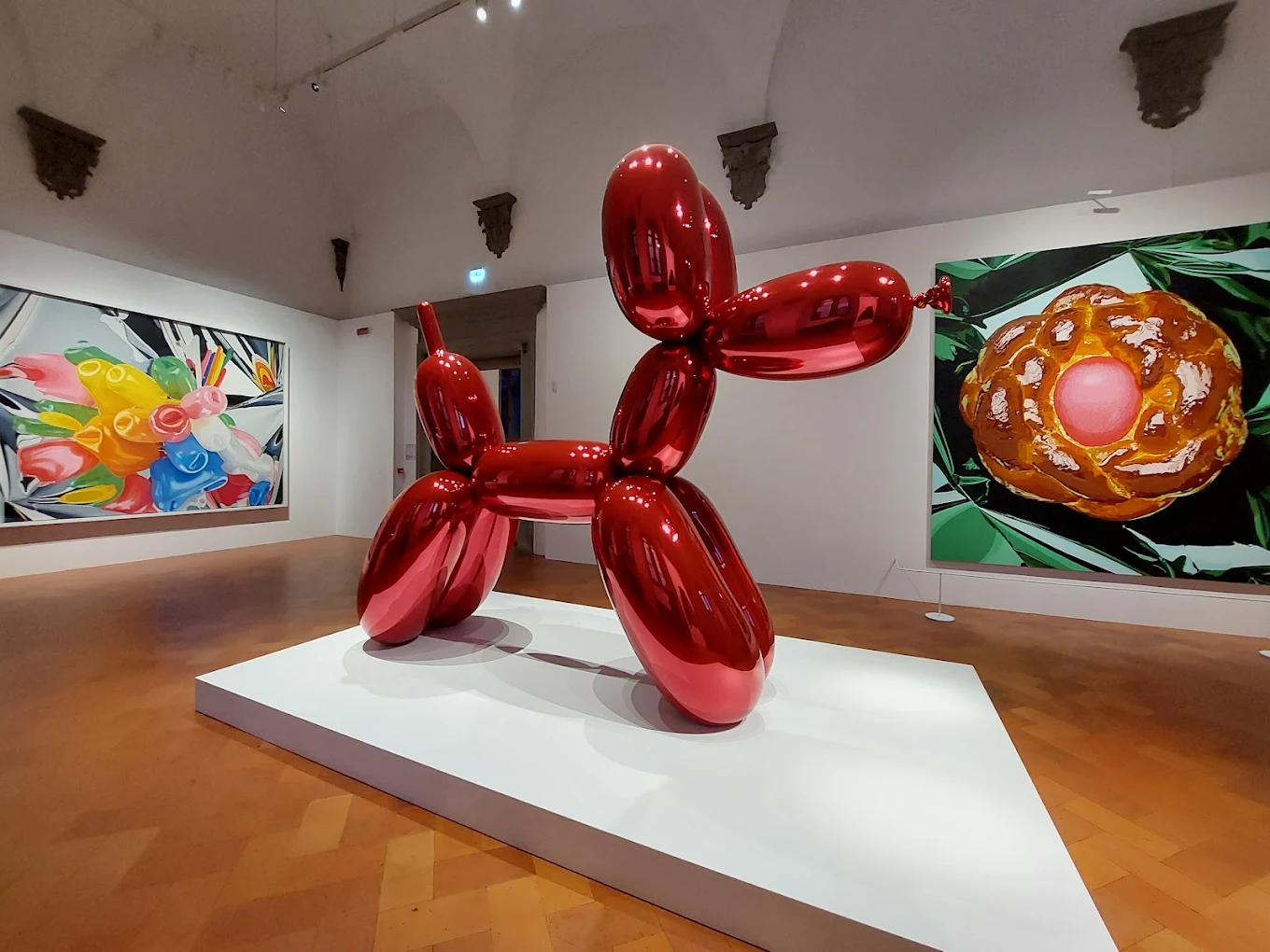
With Shine, in 2021, Jeff Koons explored the relationship between art and perception through reflective surfaces and sculptures that seemed to change along with the visitors’ gaze. In 2022, Olafur Eliasson. In Your Time transformed the spaces of Palazzo Strozzi into a route made of light, colour and optical illusions, inviting the public to become an active part of the artistic experience.
Anish Kapoor. Untrue Unreal, in 2023, also played with the perception of space through mirrors, monumental forms and surfaces capable of altering the relationship between reality and illusion. With Reaching for the Stars, Tomás Saraceno instead brought a reflection on the relationship between human beings, nature and the universe in 2023, through suspended installations and structures inspired by the forms of the natural world.
The programme, however, is not limited to contemporary art. Palazzo Strozzi has also dedicated important exhibitions to great figures in art history. Fra Angelico re-introduced one of the early Renaissance masters to the world in 2025, where his very light touch in painting and his place as foundational to Florentine art were brought back to the fore. Rothko in Florence, in 2026, took visitors on a journey to discover the world of Mark Rothko, a journey that emphasized the emotional impact of colour and the depth of abstract painting.
From 25 September 2026 to 24 January 2027, Palazzo Strozzi presents Broken – The Power of the Fragment, a exhibition comprised of over 80 works spanning from antiquity to the present day, all of which are incomplete in one way or another, or are a fragment of a larger work. Incomplete sculptures, figures marked by time and works by artists such as Michelangelo, Auguste Rodin and Louise Bourgeois tell how what remains of a work can be just as significant as what has been lost. The fragment is therefore a sort of a key to traversing centuries of art history and to reflecting on the nature of beauty, memory and transformation.
The architecture of the palace is also unique, as it is a significant feature of the exhibitions. The Renaissance courtyard is made available in general for free visits and is occasionally the site of temporary installations, which engage the building’s arches and proportions in dialogues. The rooms of the Piano Nobile offer different aspects for every new exhibition, the rooms of the Strozzina can host projects focused on the languages of contemporary art.
The two exhibitions are a different chapter in the cultural history of Florence. The works move, the artists succeed each other and the exhibition itineraries are reimagined, but Palazzo Strozzi’s power to produce surprising encounters between past and present prevails.
Visiting the exhibitions at Palazzo Strozzi means entering a place that continues to reinvent itself, where art is not just something to admire, but an opportunity to observe reality from a new perspective.